Visual answer
What Happens During a Single Blink
The mechanical, surface, and neural events that occur in a fraction of a second.
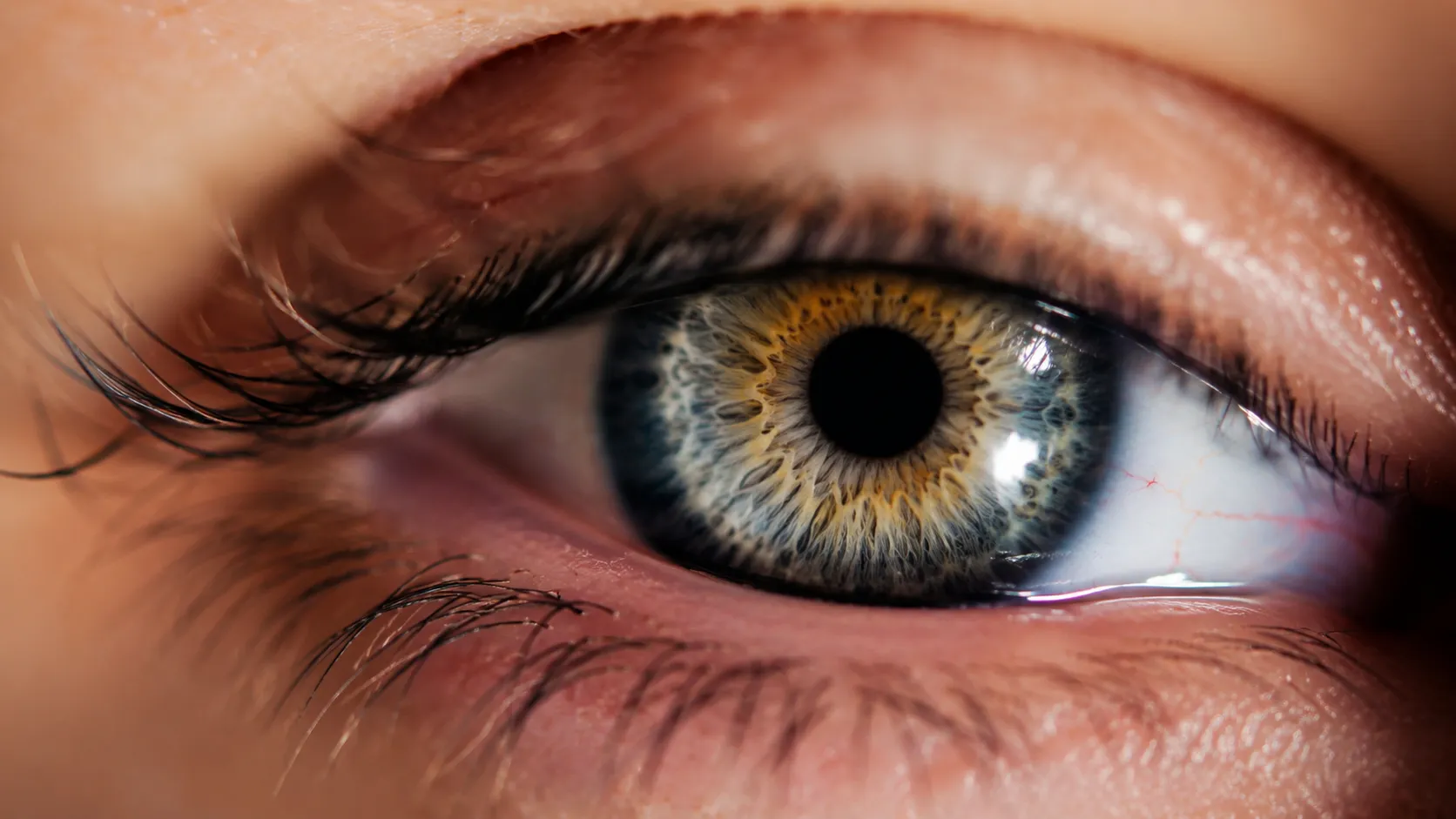
Eyelid closes, clearing the surface
The orbicularis oculi muscle closes the eyelid. The edge of the lid mechanically sweeps debris and irregularities from the corneal surface.
Tear film is redistributed
The blink spreads a fresh layer of tears across the cornea. This three-layer tear film provides lubrication, oxygen to the avascular cornea, and optical smoothness.
The brain suppresses visual processing
The brain predicts the incoming dark period and suppresses visual processing just before and during the blink. This is called blink-induced saccadic suppression. You do not see the darkness.
Visual input resumes with fresh corneal surface
The eyelid opens onto a clean, freshly lubricated cornea. Any microsecond of lost information is filled in from the brain's retained prediction of the scene.
The tear film
Your Cornea Has No Blood Supply and Depends on Tears for Oxygen
The cornea is the only tissue in the body that receives oxygen directly from the air rather than from blood vessels. Blood vessels in the cornea would scatter light and ruin vision. Instead, the tear film carries dissolved oxygen to the corneal cells with every blink. If blinking stops, hypoxic stress begins in the corneal epithelium within minutes and progresses to cell damage over hours.
The tear film itself is more complex than it appears. It has three layers: a mucin layer anchored to the corneal surface, a watery aqueous middle layer carrying oxygen, antibodies, and nutrients, and an oily outer layer from the meibomian glands that prevents evaporation. Contact lenses disrupt all three layers, which is why contact lens wearers have significantly higher rates of dry eye than non-wearers.
Blinking rate is partially regulated by dopamine. Neurological conditions that reduce dopamine, such as Parkinson's disease, produce a characteristic reduced blink rate that clinicians use as a diagnostic observation. Conditions that elevate dopamine can increase blink rate. This connection has made blink rate a research target for non-invasive assessment of dopaminergic function.
Myth vs reality
Myth vs Reality
What people think
You see darkness briefly every time you blink
You do not consciously experience the darkness of a blink. The brain uses predictive processing to suppress the awareness of visual interruption and seamlessly continues your perception of the scene around the blink.
What actually happens
Your visual perception is continuous even though your eyes close repeatedly
Saccadic suppression, the same mechanism that prevents you from seeing your eyes move in a mirror, also prevents you from perceiving blink-induced darkness. The brain fills the gap using stored information about the current scene.
Quick answers
Common questions
Why do we blink less when reading or using screens? +
High visual attention tasks suppress spontaneous blinking. The brain prioritizes information intake over maintenance. This is an evolutionary mismatch with modern technology because the suppression was designed for brief periods of intense attention, not eight hours of screen work.
What happens if you try not to blink? +
Within a minute or two, the eye surface dries and becomes painful. Vision blurs as the tear film breaks up. Most people cannot voluntarily suppress blinking for more than 30 to 60 seconds before reflex blinking overrides the attempt.
Why do newborns blink so rarely? +
Newborns blink only about two times per minute, compared to 15 to 20 in adults. Their tear production is lower, they spend more time in sleep states, and the spontaneous blink circuit in the basal ganglia is still developing. Their eyes also have a higher proportion of closed-time through sleep.
Can blinking rate indicate health problems? +
Yes. Reduced blinking is associated with Parkinson's disease, dry eye disease, and thyroid eye disease. Elevated blinking can indicate corneal irritation, blepharospasm, Tourette syndrome, or certain drug effects. Significant changes in personal blink rate are worth mentioning to a doctor.
Do all animals blink the way humans do? +
Most vertebrates have some form of eyelid movement. Snakes lack eyelids and have a fixed transparent scale covering the eye. Many birds have a nictitating membrane, a semi-transparent third eyelid that sweeps horizontally. Fish do not blink at all because their eyes are constantly bathed in water.