Visual answer
How Fish Sleep Without Closing Their Eyes
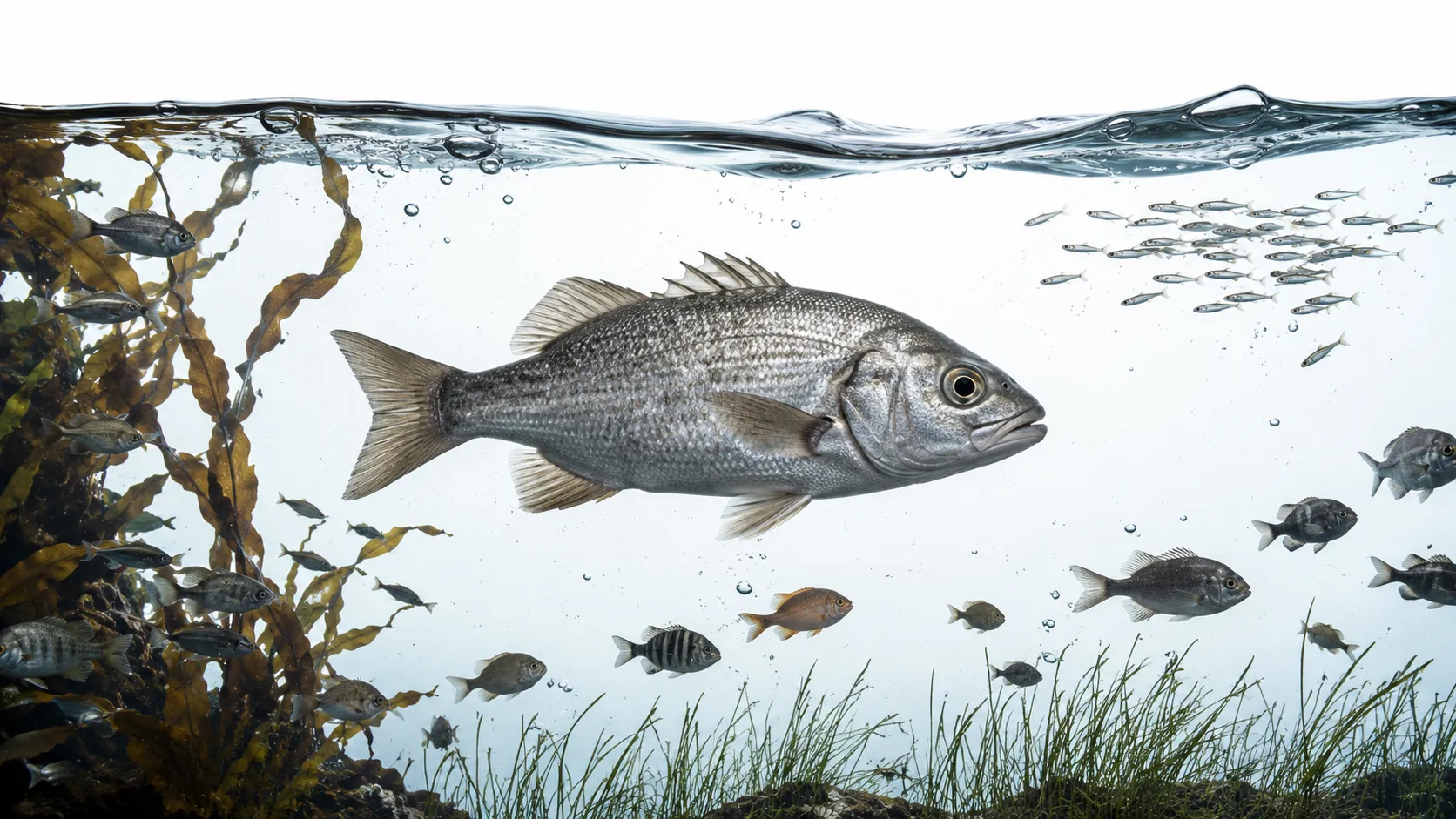
Fish sleep is identified by behavior and nervous-system state, not by eyelids.
Activity drops
Sleeping fish may hover, settle near shelter, lie on the bottom, or swim slowly depending on the species.
Responsiveness decreases
A resting fish is harder to startle and less reactive to small changes in its environment.
Recovery sleep appears
After sleep deprivation, fish show rebound sleep, a key sign that the body is tracking sleep need.
Brains keep cycling
Zebrafish show sleep states with activity patterns that resemble ancient versions of mammalian sleep stages.
Why it counts
Fish Sleep, Just Not Like Humans
The main reason fish sleep seems strange is that we instinctively associate sleep with closed eyes, a bed, and lying still.
Fish do not have eyelids, and many cannot simply curl up somewhere safe. That makes their sleep harder for humans to recognise.
Scientists define sleep more broadly: reduced activity, lower responsiveness, a distinct nervous-system state, and rebound sleep after deprivation.
By those standards, fish sleep. They rest in predictable rhythms, become less responsive, and pay a biological cost when sleep is disrupted.
Mechanism
What Happens When a Fish Sleeps
Fish sleep is a low-power state for the nervous system, not simply a pause in movement.
- 1
Activity drops
Sleeping fish hover, settle near shelter, lie on the bottom, or keep slow automatic swimming depending on the species.
- 2
Responsiveness decreases
A resting fish is harder to startle and less reactive to minor changes. The alarm threshold is raised, but not switched off completely.
- 3
The nervous system catches up
Sleep supports repair, memory consolidation, restored neural chemistry, and other maintenance tasks that are difficult to perform during active waking.
Surprises
The Details That Make Fish Sleep Strange
Zebrafish have REM-like sleep
Zebrafish have been shown to exhibit sleep states with brain activity patterns that roughly parallel mammalian sleep stages, including something resembling REM sleep.
That pushes the origin of REM-like states deep into vertebrate evolution.
Parrotfish make mucus cocoons
Some parrotfish surround themselves in a transparent mucus bubble before sleeping.
Scientists think the cocoon may help mask scent from nocturnal predators.
Some sharks keep moving
Sharks that need forward movement to breathe use adaptations that let the body keep swimming while parts of the nervous system rest.
It is a biological compromise between breathing, movement, and sleep.
Evolution
Why Evolution Did Not Get Rid of Sleep
Sleep creates a serious survival problem. A sleeping animal reacts more slowly, notices less, and becomes easier to attack.
That makes fish especially interesting. Many live in environments where hiding is difficult and predators are constant.
Yet sleep persists, which suggests that whatever sleep does is more essential than the risk it creates.
The likely reason is that sleep is not just rest. It is a maintenance state for complex nervous systems: clearing accumulated stress, consolidating memory, restoring chemical balance, and keeping neural circuits usable.
Myth vs reality
Myth vs Reality
What people think
Fish do not sleep because they never close their eyes
Because most fish lack eyelids, they appear awake even when they are resting.
What actually happens
Closed eyes are not required for sleep
Fish meet the behavioral criteria for sleep: reduced activity, lowered responsiveness, rebound sleep after deprivation, and changes in nervous-system state.
Quick answers
Common questions
Do fish really sleep? +
Yes. Fish enter a state of reduced activity and lowered responsiveness, and many show rebound sleep after deprivation.
How do fish sleep without eyelids? +
They sleep with their eyes open because most fish cannot close them. Sleep is measured by behavior and nervous-system state, not by eyelid position.
Do fish dream? +
It is unknown whether fish have subjective dreams, but zebrafish show REM-like sleep patterns that may be ancient precursors of dreaming.
Do sharks sleep while swimming? +
Some shark species can rest while continuing to swim, while others rest motionless on the seafloor. The details vary by species.