Visual answer
The Ptolemaic Dynasty: Cleopatra's Family Tree
The Ptolemies married siblings for 300 years. Cleopatra was the product of intense inbreeding - and one of the few who broke the pattern.
Ptolemy I Soter
Macedonian Greek general under Alexander the Great. Founded the dynasty in 305 BCE.
Sibling marriage
Ptolemies married brothers and sisters for 300 years to keep power within the family.
Cleopatra VII
Born 69 BCE. Daughter of Ptolemy XII. Mother's identity unknown - possibly Egyptian or Greek.
Caesarion
Cleopatra's son with Julius Caesar. Ruled briefly as Ptolemy XV before being executed by Octavian.
Her real appearance
What Did Cleopatra Actually Look Like?
The question people ask more than any other: was Cleopatra beautiful? The honest answer is that no one knows - and the evidence we have suggests she was not beautiful by classical standards.
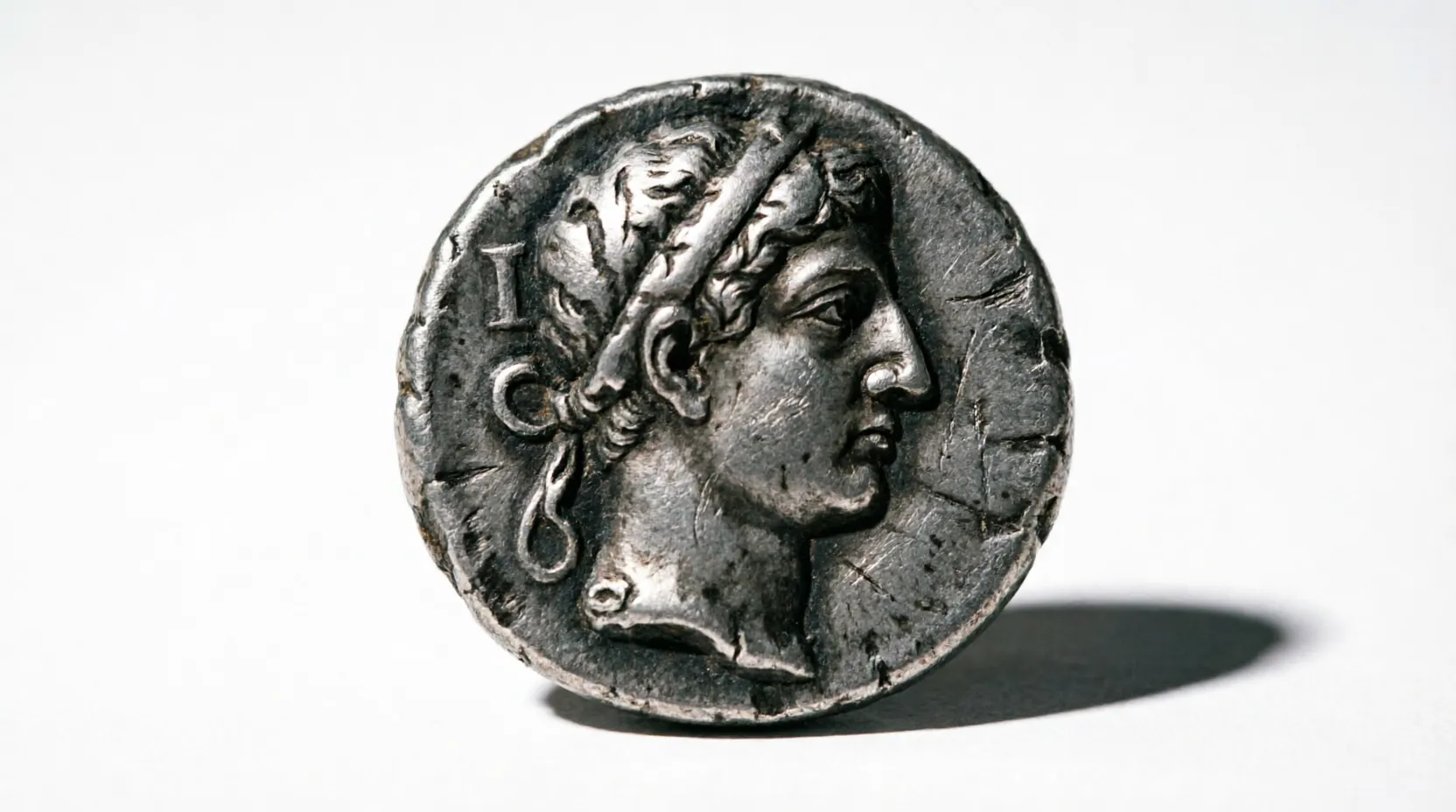
We have three types of evidence for Cleopatra's appearance: coins minted during her reign, a single marble bust that survives, and written descriptions by Roman historians who never met her.
The coins are the most reliable because they were official state propaganda. Coins from Alexandria show Cleopatra with a prominent nose, a strong jaw, a projecting chin, and deep-set eyes. She does not look like Elizabeth Taylor. She does not look like a classical beauty. She looks like a powerful ruler with a hooked nose and a determined expression.
The only surviving marble bust that may represent Cleopatra is in the Altes Museum in Berlin. It shows a woman with a similar profile - the same strong nose, the same firm mouth. But even this bust is disputed. Some scholars think it depicts one of her daughters instead.
What about the written sources? Plutarch, writing 150 years after her death, admitted that her beauty was not 'incomparable' or 'striking.' He wrote that the real charm was her voice, her intelligence, and her charisma. The Roman historian Cassius Dio, writing 200 years later, said almost the same thing: her appeal was not her appearance but her wit and conversation.
So here is the truth that Hollywood will never show you. Cleopatra was probably not exceptionally beautiful. She was exceptionally intelligent. She spoke nine languages. She was the first Ptolemaic ruler in 300 years to learn Egyptian. She could debate philosophy, command armies, and negotiate with the most powerful men in the world. And she used those skills to conquer Julius Caesar and Mark Antony - not her face.
If you want to know what Cleopatra really looked like, look at the coins. She had a large nose, a strong jaw, and a fierce expression. She was not ugly. But she was not a Hollywood goddess either. She was something far more interesting: a woman whose power came from her mind, not her mirror.
The ethnicity debate
Was She Egyptian, Greek, or African? The Ethnicity Debate
This question has become one of the most contested debates in ancient history. The answer is straightforward, but modern politics and identity have made it complicated.
Cleopatra was of Macedonian Greek descent. Her family, the Ptolemaic dynasty, originated with Ptolemy I Soter, a Greek general who served under Alexander the Great. After Alexander's death in 323 BCE, Ptolemy seized control of Egypt and established his own dynasty. The Ptolemies ruled Egypt for the next 300 years.
Here is the critical fact: the Ptolemies almost never married outside their own family. They married brothers to sisters, uncles to nieces, fathers to daughters - a deliberate strategy to keep power and wealth within the Greek ruling class. Cleopatra's parents were likely half-siblings. Her ancestors going back twelve generations were almost exclusively Macedonian Greek.
But there is a complication. We do not know who Cleopatra's mother was. Her father was Ptolemy XII. Her mother is never named in any ancient source. Some historians speculate she may have been Egyptian or part Egyptian. Others argue she was a Greek woman from a different family. The truth is that we will never know.
So what was Cleopatra's ethnicity? She was predominantly Macedonian Greek. Was she Egyptian? Not by blood - but she was the first Ptolemaic ruler to learn the Egyptian language, adopt Egyptian religious customs, and present herself as a true pharaoh rather than a foreign conqueror. Was she black? The evidence for sub-Saharan African ancestry is zero. No ancient source suggests it. No genetic evidence exists because her body has never been found.
The debate about Cleopatra's race is not a historical debate. It is a modern political argument using ancient figures as symbols. The historical answer is clear: Cleopatra was a Macedonian Greek woman who ruled Egypt and strategically positioned herself as an Egyptian pharaoh. Anything beyond that is speculation, not history.
Ethnicity myths
Myth vs Reality: Cleopatra's Ethnicity
What people think
Cleopatra was Egyptian or sub-Saharan African
Many modern arguments claim Cleopatra was black or Egyptian by blood.
What actually happens
She was predominantly Macedonian Greek
The Ptolemaic dynasty was Greek in origin and practiced intense inbreeding for 300 years. Her mother is unknown, but no evidence supports sub-Saharan African ancestry.
Her death
How Did Cleopatra Die - And Did She Really Kill Herself?
The story is one of the most famous deaths in history. Cleopatra, defeated and captured, chose suicide over submission to Rome. She summoned an asp, pressed it to her breast, and died from its venom while her servants perished beside her.
Almost every detail of this story is unreliable.
Here is what we actually know. After Mark Antony's defeat at the Battle of Actium in 31 BCE and his subsequent suicide in Cleopatra's arms following a false report of her death, Octavian (soon to be Emperor Augustus) captured Alexandria. He intended to parade Cleopatra through Rome in chains as a trophy of his victory. Before he could, Cleopatra died. She was 39 years old. The date was August 10 or 12, 30 BCE.
Everything beyond these bare facts comes from Roman historians writing decades or centuries after her death. Plutarch, our most detailed source, wrote his Life of Antony around 100 CE - 130 years after Cleopatra died. He was not there. He had no eyewitness accounts. He was repeating stories that had been passed down for generations.
Plutarch says Cleopatra died from the bite of an asp. But he also mentions alternative theories: that she used a hollow hairpin to administer poison, or that she swallowed a deadly ointment. The Roman historian Strabo, writing about 30 years after her death, says she died from a toxic salve - not an asp bite.
Why does this matter? Because Octavian had every reason to spread the suicide story. He needed Cleopatra dead. She was too dangerous alive - a living symbol of resistance, the mother of Caesar's only known son, a woman who could rally Egypt against Rome. If Cleopatra died by suicide, Octavian was off the hook. If she was murdered, Octavian looked like a tyrant.
There is a third possibility that almost no one discusses. Cleopatra may have been killed by Octavian's men and the suicide story invented afterward. We will never know for certain. No autopsy was performed. Her body was hastily buried and then lost. The most famous death in ancient history is also one of the least documented.
What we can say with confidence: Cleopatra died in 30 BCE at age 39. She was in a locked room with her two serving women. All three died. Roman writers said it was suicide by asp. But no contemporary eyewitness account exists. The mystery of how she actually died will never be solved unless her tomb is found and forensic science can examine her remains.
Why she died
Why Did Cleopatra Kill Herself?
If the suicide story is true - and it may not be - why would Cleopatra choose death?
The answer is Roman triumph. When Octavian defeated Antony, he planned to parade Cleopatra through Rome in chains. This was not merely humiliation. Roman triumphs were public spectacles where defeated enemies were marched through the streets, jeered at by crowds, and often executed at the end.
For Cleopatra, a queen who had ruled Egypt for two decades, who had negotiated as an equal with Caesar and Antony, who had styled herself as the New Isis, this fate was worse than death. She would rather die as a queen than live as a spectacle.
There is also the question of her children. If Cleopatra died by suicide, her children might be spared. The Romans had a habit of killing the children of defeated enemies - but they were less likely to murder the orphaned sons and daughters of a woman who had taken her own life. Caesarion, her son with Julius Caesar, was executed anyway. But her other three children were sent to Rome and raised by Antony's widow, Octavia.
The final reason is simpler. Cleopatra loved Antony. Or at least she was deeply bonded to him after years of alliance, marriage, and shared power. When Antony died in her arms following a false suicide report that drove him to fall on his sword, Cleopatra lost her protector, her ally, and the father of three of her children. The will to survive may have simply died with him.
Or perhaps she did not kill herself at all. Perhaps Octavian had her murdered and invented the suicide story. That possibility lingers in every account, unsolvable without her body.
Death theories
Theories of Cleopatra's Death
Asp bite (most famous)
Described by Plutarch (100 CE) and other Roman writers. No contemporary source confirms it. Biologically questionable - asp venom is slow and painful, not a peaceful death.
Toxic ointment or salve
Mentioned by Strabo (writing ~30 CE) as an alternative theory. Possibly a fast-acting poison unknown to modern science.
Hollow hairpin poison
Plutarch mentions this as an alternative. A hairpin could conceal a small dose of potent poison.
Murder by Octavian
Octavian needed Cleopatra dead to secure his power. He had motive, means, and opportunity. The suicide story conveniently removes suspicion.
Her lost tomb
Her Tomb: The Greatest Undiscovered Site in Archaeology
Two thousand years of searching. Over a dozen claimed discoveries. Every single one has been wrong.
Cleopatra's tomb has never been found. Her body has never been recovered. And this is one of the strangest facts about her death.
According to the ancient sources, Octavian allowed Cleopatra and Antony to be buried together after their suicides. He gave them a proper funeral and placed their remains in a tomb. But within a few generations, that tomb was lost. By the time Roman tourists visited Alexandria in the first and second centuries CE, no one could tell them where the queen was buried.
Why would such an important tomb disappear? The most likely answer is rising sea levels and earthquakes. Ancient Alexandria was built along the Mediterranean coast. Over the past two thousand years, much of the old city has sunk beneath the harbor. Parts of the royal quarter - including the palace where Cleopatra lived and probably died - are now underwater. Archaeologists have found the remains of the Ptolemaic palace beneath the waves of Alexandria's harbor. They have not found the tomb.
The leading modern theory comes from Dr. Kathleen Martinez, an archaeologist who has been excavating at Taposiris Magna, a temple site about 30 miles west of Alexandria, since 2005. Martinez believes Cleopatra chose to be buried in a temple of Isis because she styled herself as the New Isis. The temple at Taposiris Magna was dedicated to Isis and Osiris - the same gods associated with Cleopatra and Antony.
Martinez has made remarkable finds: coins bearing Cleopatra's face, statues of Egyptian gods, a massive cemetery, and a network of underground tunnels. What she has not found is the tomb. Excavations continue, but the tomb remains elusive.
What would finding Cleopatra's tomb mean? Everything. Her body could be subjected to forensic analysis. We would finally know her true appearance, her exact ancestry, the diseases she suffered, and the poison that killed her. It would be the archaeological discovery of the century, rivaling Tutankhamun.
Until then, the greatest queen of the ancient world remains lost somewhere beneath the sands or beneath the sea, waiting to be found.
Love life
Caesar, Antony, and Her Brother-Husband: The Real Love Life
The romantic story of Cleopatra is almost entirely Hollywood. The truth is far more political - and far more disturbing by modern standards.
Let us start with her brother. Cleopatra was married to her younger brother, Ptolemy XIII. He was 10 years old at the time of their marriage. She was 18. This was not love. It was Ptolemaic tradition. The Ptolemies had married siblings for 300 years to keep power within the family. Cleopatra had no choice in the matter. Her father's will forced the marriage as a condition of her rule.
Did Cleopatra have a child with her brother? No. Her only child with a Ptolemaic brother was with her younger brother Ptolemy XIV, whom she married after Ptolemy XIII died. That child died in infancy. The famous children of Cleopatra - Caesarion and the twins with Antony - were not incestuous products.
Now consider Julius Caesar. He was 52 years old when he met Cleopatra. She was 21. He was a married Roman general. She was a deposed queen seeking military support. Modern readers often frame this as a great romance. The ancient sources suggest something else: a calculated political alliance in which both parties used sex as a tool. Cleopatra needed Caesar's army to reclaim her throne. Caesar needed Cleopatra's wealth to fund his wars. The famous scene of Cleopatra rolled in a carpet and presented to Caesar comes from Plutarch, writing 150 years later. It may be invention.
Did Caesar love Cleopatra? He never married her. He never acknowledged Caesarion as his son publicly. He brought Cleopatra to Rome but kept her in a villa across the river, away from his wife and Roman society. That does not sound like love. It sounds like convenience.
Then came Mark Antony. The age gap was smaller - he was 42, she was 29 when their relationship began. Antony was genuinely besotted with Cleopatra in ways that Caesar never was. He spent winters with her in Alexandria. He fathered three children with her. He famously staged the Donations of Alexandria, declaring Cleopatra and her children the rulers of the eastern Roman provinces.
This was Antony's undoing. Octavian used Antony's devotion to Cleopatra as propaganda, portraying him as a man enslaved by an Eastern queen. The Roman Senate declared war on Cleopatra - not on Antony. The Battle of Actium followed. And Antony fell on his sword after receiving a false report that Cleopatra had killed herself.
The age gap between Antony and Cleopatra was 13 years. By comparison, Caesar was 31 years older than Cleopatra. Neither gap would raise eyebrows today, but the power dynamics were extreme. Cleopatra was always the junior partner, always the one who needed Roman military support, always the one taking greater risk.
Was Cleopatra a romantic figure? Only if you ignore the politics. She was a queen trying to save her dynasty. She used sex as a diplomatic tool because that was what powerful women in the ancient world had to do. The romance narrative was invented by Roman writers to explain how a foreign queen could seduce their generals. It was an excuse. And it is still working two thousand years later.
Her real genius
The Hidden Genius: Languages, Power, and How She Actually Ruled
Everything popular culture gets wrong about Cleopatra centers on her appearance and her love life. Everything it misses centers on her mind.
Cleopatra was the first Ptolemaic ruler in 300 years to learn the Egyptian language. Her predecessors spoke only Greek and treated Egypt as a conquered territory. Cleopatra realized that to rule Egypt effectively, she had to become Egyptian in the eyes of her subjects. She learned the language. She adopted Egyptian religious customs. She presented herself as the daughter of Isis.
She spoke nine languages total. Greek was her native tongue. She learned Egyptian. She spoke Latin to negotiate with Romans. She also spoke Hebrew, Aramaic, Ethiopian, Persian, and the languages of the Troglodytes (an ancient people of North Africa) and Syrians. How many world leaders today speak nine languages? Almost none.
She was also a skilled politician. When her father died, he left the throne to Cleopatra and her younger brother Ptolemy XIII jointly. The brother's advisers pushed her out of power. Cleopatra did not accept this. She raised an army, sought support from Julius Caesar, and famously had herself smuggled into his presence rolled inside a carpet. Within days, she had convinced Caesar to back her claim. Her brother died in the ensuing civil war. Cleopatra was queen.
When Caesar died, she aligned with Mark Antony. When Antony fell, she tried to negotiate with Octavian. Only when negotiation failed did she die. Every move was calculated. Every romance was political. Every language she learned was a tool of statecraft.
How did Cleopatra impact the world? She preserved Egypt's independence for two decades against the most powerful empire in history. She gave Rome its greatest propaganda villain. She inspired Shakespeare and Shaw and Elizabeth Taylor. And she demonstrated that a woman could rule as effectively as any man - by being smarter, not by being more beautiful.
Quick answers
Common questions
How old was Cleopatra when she died? +
Cleopatra died at age 39 in 30 BCE. She was born in 69 BCE.
How did Cleopatra look? +
Based on coins minted during her reign, she had a prominent nose, a strong jaw, a projecting chin, and deep-set eyes. She was not the classical beauty of Hollywood films.
Was Cleopatra black or white? +
She was predominantly Macedonian Greek. The Ptolemaic dynasty was Greek in origin. Her mother's identity is unknown, but no evidence supports sub-Saharan African ancestry.
Why did Cleopatra marry her brother? +
Ptolemaic tradition required sibling marriage to keep power within the family. She was forced by her father's will to marry her 10-year-old brother Ptolemy XIII.
Did Julius Caesar love Cleopatra? +
There is no evidence of love. The relationship was political. Caesar needed her wealth; she needed his army. He never married her or publicly acknowledged Caesarion.
What was the age gap between Antony and Cleopatra? +
Antony was about 13 years older than Cleopatra. He was 42 when their relationship began; she was 29.
Could Cleopatra speak Egyptian? +
Yes. She was the first Ptolemaic ruler in 300 years to learn the Egyptian language. She also spoke at least eight other languages.
Where is Cleopatra buried? +
Her tomb has never been found. The leading theory places it at Taposiris Magna, west of Alexandria, but excavations have not confirmed it.
How did Cleopatra impact the world? +
She preserved Egypt's independence for two decades against Rome, became Rome's greatest propaganda villain, and demonstrated that a woman could rule as effectively as any man.