Brain imaging studies show that anticipating a craved food activates reward-related brain regions similarly to how the brain responds to certain addictive substances, though the intensity and mechanisms differ.
Body & Brain
Why do humans experience food cravings?
Why Do We Get Cravings?
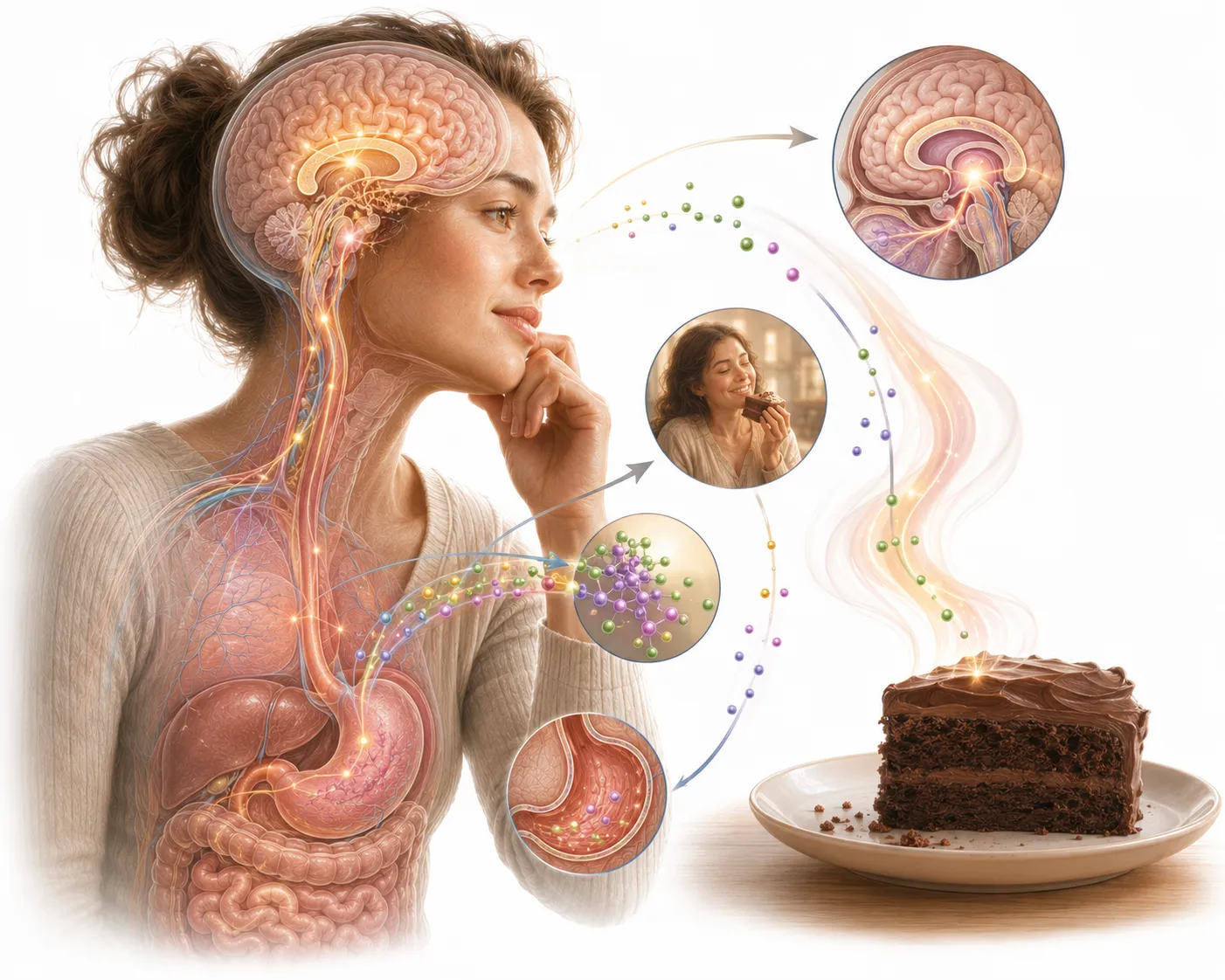
A craving rarely announces itself politely; it arrives suddenly, specifically, and often for exactly the food you weren't planning to eat.
On this page
The short answer
Cravings arise from a combination of factors, including the brain's reward system responding to memories and expectations of pleasurable foods, hormonal fluctuations that influence appetite and mood, and, in some but not all cases, the body signaling a genuine need for specific nutrients or calories.
Cravings are driven substantially by the brain's reward circuitry, particularly regions involving dopamine, which respond not just to eating a pleasurable food but to anticipating and remembering it, which is why a craving can be triggered by a smell, a memory, stress, or even simply seeing a food advertisement. Hormones also play a significant role; fluctuations in hormones like ghrelin, which stimulates appetite, and leptin, which signals fullness, can shift both hunger levels and specific food preferences, which is part of why cravings often intensify during hormonal changes such as the menstrual cycle or periods of sleep deprivation. While popular belief often frames cravings as the body specifically signaling a nutrient deficiency, such as craving red meat due to low iron, scientific evidence for this direct nutrient-signaling explanation is considerably weaker and more inconsistent than the evidence supporting learned, psychological, and hormonal drivers of cravings.
At a glance
Cravings often begin with a trigger unrelated to actual physical hunger.
A specific food craving always means your body is signaling exactly which nutrient it's missing.
Brain imaging studies show that food cravings activate some of the same reward pathways involved in addiction, lighting up in anticipation of a specific food well before it's ever eaten.
Picture a highly specific advertisement popping into your mind uninvited, tailored exactly to something you want, timed by your own brain rather than any outside marketer.
Diagram
Why Do We Get Cravings: the idea in one diagram
Cravings emerge from an interplay of reward-driven brain chemistry, hormonal fluctuations affecting appetite, and learned associations between specific foods and pleasurable experiences or emotional states.
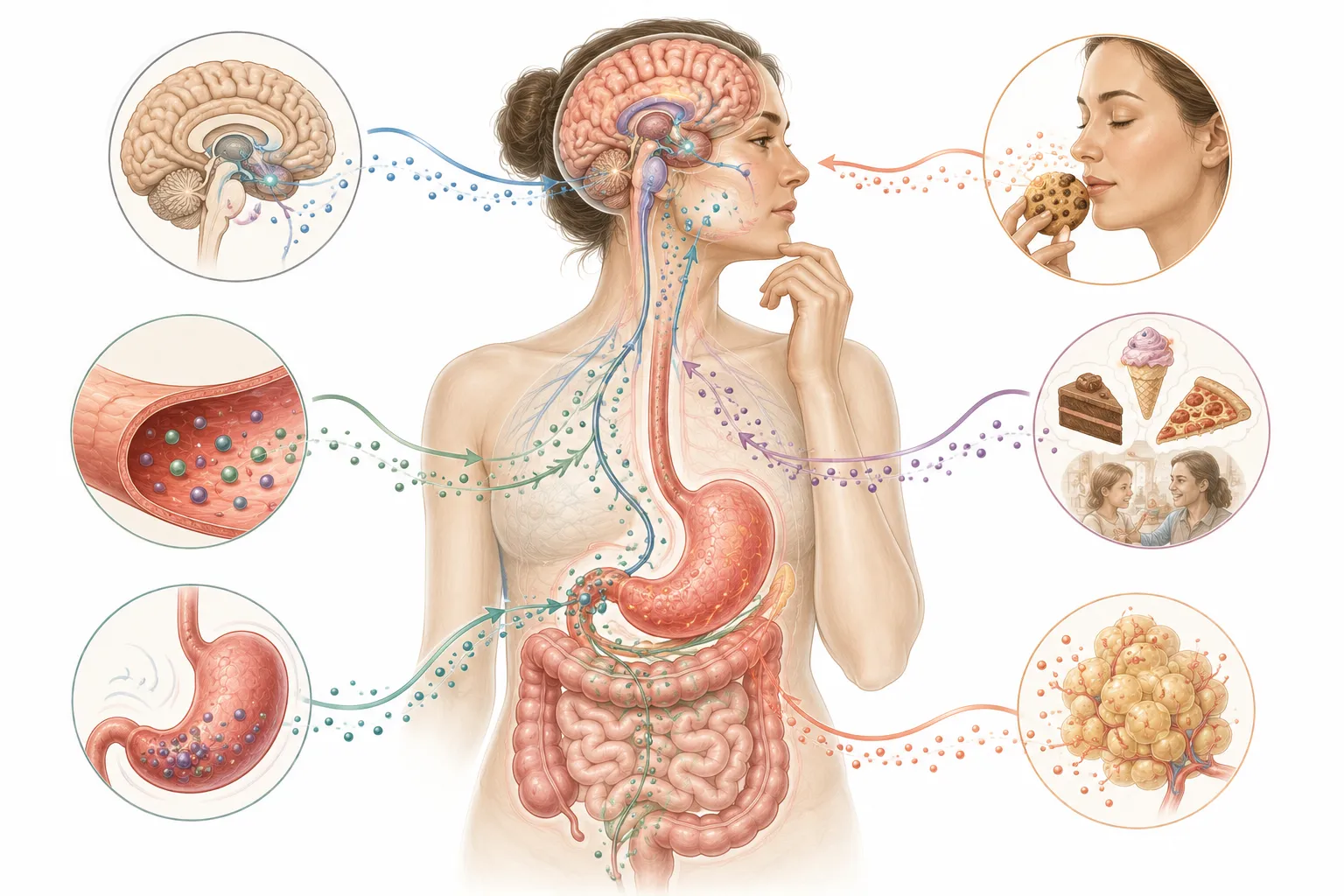
- 1A trigger activates a learned association
Cravings often begin with a trigger unrelated to actual physical hunger.
- 2The brain's reward system responds
Anticipation itself is a major driver of the craving's intensity.
- 3Hormones modulate hunger and food preference
Hormonal state can amplify or dampen cravings independent of psychological triggers.
- 4Behavior follows the combined signal
A craving's intensity often reflects how many of these systems are pointing in the same direction at once.
How it works
The mechanism
Cravings emerge from an interplay of reward-driven brain chemistry, hormonal fluctuations affecting appetite, and learned associations between specific foods and pleasurable experiences or emotional states.
- Step 01
A trigger activates a learned association
A smell, memory, emotional state, or environmental cue activates a previously learned association between a specific food and a rewarding experience.
Like a familiar song immediately bringing back a specific memory or mood.
Cravings often begin with a trigger unrelated to actual physical hunger.
- Step 02
The brain's reward system responds
Dopamine-related reward circuitry activates in anticipation of the craved food, generating a strong motivational pull well before any food is actually consumed.
Like the excitement of anticipating a favorite event before it even begins.
Anticipation itself is a major driver of the craving's intensity.
- Step 03
Hormones modulate hunger and food preference
Hormones like ghrelin and leptin, along with stress hormones like cortisol, shift baseline hunger levels and can bias food preferences toward certain types of foods.
Like background settings quietly adjusting how strongly a signal comes through.
Hormonal state can amplify or dampen cravings independent of psychological triggers.
- Step 04
Behavior follows the combined signal
When reward anticipation and hormonal drive align strongly enough, the resulting craving can become difficult to ignore, often leading to the specific food being sought out and eaten.
Like multiple independent signals converging to finally tip a decision one way.
A craving's intensity often reflects how many of these systems are pointing in the same direction at once.
Surprises
Facts worth sitting with
Brain imaging studies show that anticipating a craved food activates reward-related brain regions similarly to how the brain responds to certain addictive substances, though the intensity and mechanisms differ.
Surprising facts
What seems backwards
Worth comparing
In everyday life
Easy to get wrong
Pressure points
Where the simple answer gets interesting
Why are cravings often for very specific foods rather than food in general?
Cravings are heavily influenced by learned associations and memory, meaning the brain links specific foods to past pleasurable experiences, moods, or contexts, producing a highly targeted desire rather than generalized hunger.
A craving is less like raw hunger and more like your brain replaying a very specific, favorite memory.
Why do cravings for comfort food increase during stress?
Cortisol and other stress-related hormones interact with the brain's reward system in ways that can heighten the appeal of high-fat, high-sugar foods, which is part of why stress so reliably shifts people toward comfort food choices.
Stress doesn't just affect mood, it quietly recalibrates what your brain finds most appealing to eat.
Do cravings really mean your body needs a specific nutrient?
In most cases, no; while this idea is popular and intuitive, scientific evidence supporting a direct link between specific cravings and specific nutrient deficiencies is inconsistent, with learned behavior and reward psychology playing a much larger, better-supported role.
One of the most commonly repeated explanations for cravings turns out to be one of the least scientifically supported.
Behind the science
The story behind it
Research on imagined eating reducing cravings
Researchers studying craving psychology found that repeatedly imagining the act of eating a specific food could reduce subsequent craving intensity for that food.
The finding provided practical insight into using mental rehearsal as a potential craving-management strategy.
Understanding the psychological mechanism behind a craving can open up surprisingly simple ways to manage it.
Brain imaging studies of food craving anticipation
Researchers used functional MRI to observe brain activity in people anticipating a specific craved food before consumption.
Reward-related brain regions activated strongly during anticipation alone, showing that a significant part of a craving's intensity occurs before any food is actually eaten.
Clarify
Myth and reality
Myth
A specific food craving always means your body is signaling exactly which nutrient it's missing.
Reality
Most cravings are driven primarily by learned associations, brain reward chemistry, and hormonal fluctuations rather than a precise, targeted nutritional need.
Evidence
Research comparing craving patterns to actual nutrient status generally finds a weak and inconsistent relationship, except in rare specific conditions like pica.
Looking closer
The deeper pattern
A craving is rarely just about the food itself, it's about the memory, mood, or context the brain has learned to associate with that food.
One way to think about it
Desires that feel spontaneous and urgent are frequently the product of learned patterns built up over time, resurfacing under the right triggering conditions rather than appearing out of nowhere.
What feels like a sudden impulse is often, on closer inspection, a well-rehearsed pattern finally finding its trigger.
Limits
Where the explanation bends
Pica, a condition involving cravings for non-food substances.
In rare cases, sometimes linked to genuine nutrient deficiencies like iron deficiency, people experience persistent cravings for substances with no nutritional value, such as ice, dirt, or chalk.
This unusual condition is one of the few well-documented cases where a craving does appear tied to an actual, identifiable deficiency.
In daily life
What this helps you notice
Understanding the psychological and hormonal roots of cravings can help people manage them more effectively than simply relying on willpower alone.
Some dietitians recommend addressing craving triggers directly, such as improving sleep or managing stress, rather than only focusing on resisting the craving itself.
Remember
Key takeaways
- 1
Cravings are driven significantly by the brain's reward system responding to memory, anticipation, and learned associations.
- 2
Hormones like ghrelin, leptin, and cortisol influence hunger levels and can shift specific food preferences.
- 3
Scientific evidence for cravings signaling specific nutrient deficiencies is weaker than commonly believed.
- 4
Stress reliably increases cravings for high-fat, high-sugar comfort foods in many people.
- 5
Pica, a craving for non-food substances, is one of the few conditions clearly linked to an actual nutrient deficiency.
A craving was never really a message from your body about a missing nutrient, it's closer to a highly personalized advertisement, written by your own brain, drawing on memory and reward long before any actual need enters the picture.
The next specific, insistent craving that shows up uninvited isn't a sign of weak willpower, it's a small, coordinated campaign your own brain chemistry has been quietly running behind the scenes.
Read around the idea
More questions with the same curious pull
Nearby doors from the TinyThat archive, chosen by topic, intent, and reader curiosity.
Body & Brain
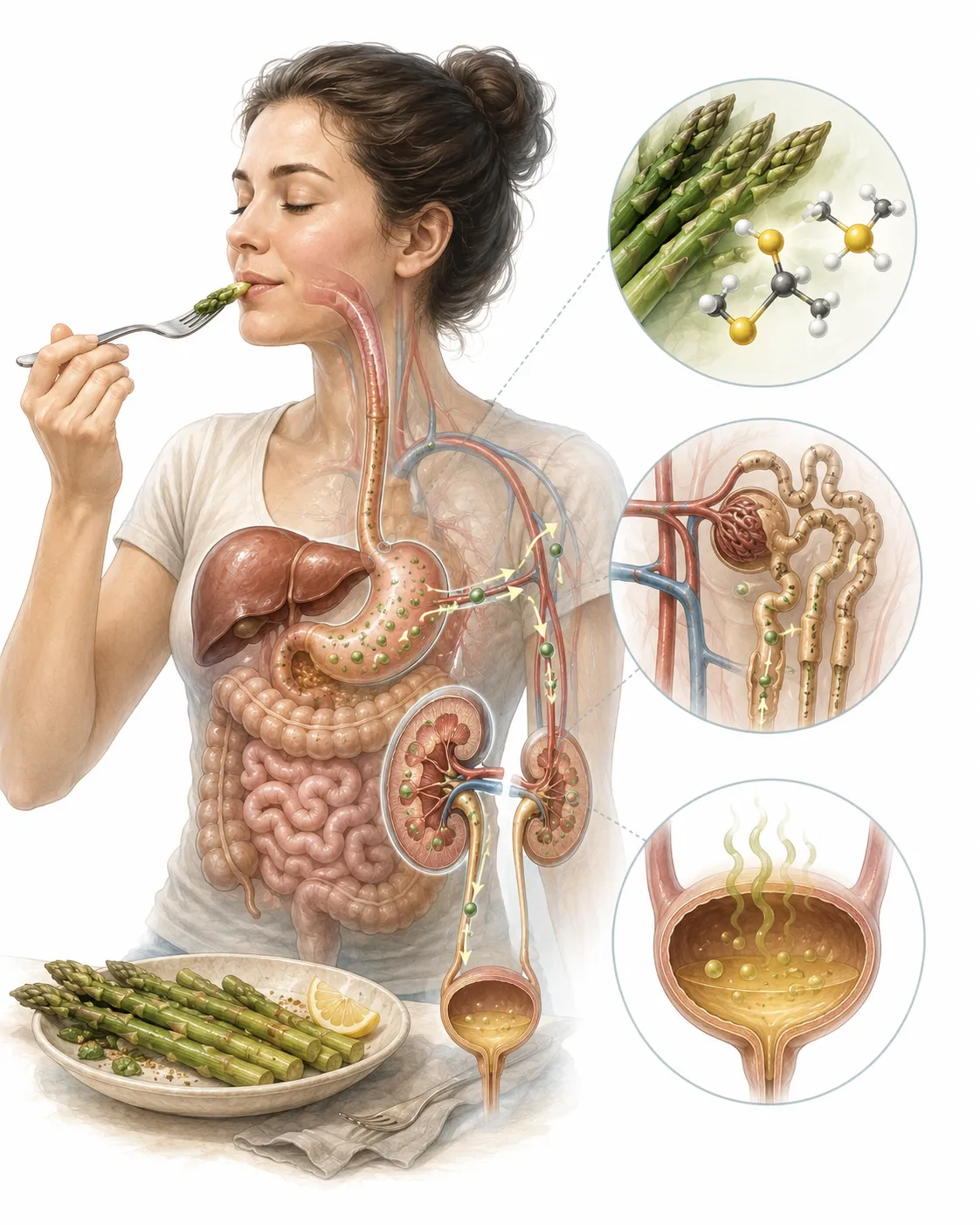
Why Does Urine Smell After Asparagus?
Digestion breaks asparagus down into sulfur compounds, and genetic differences determine who can smell the resulting...
Body & Brain
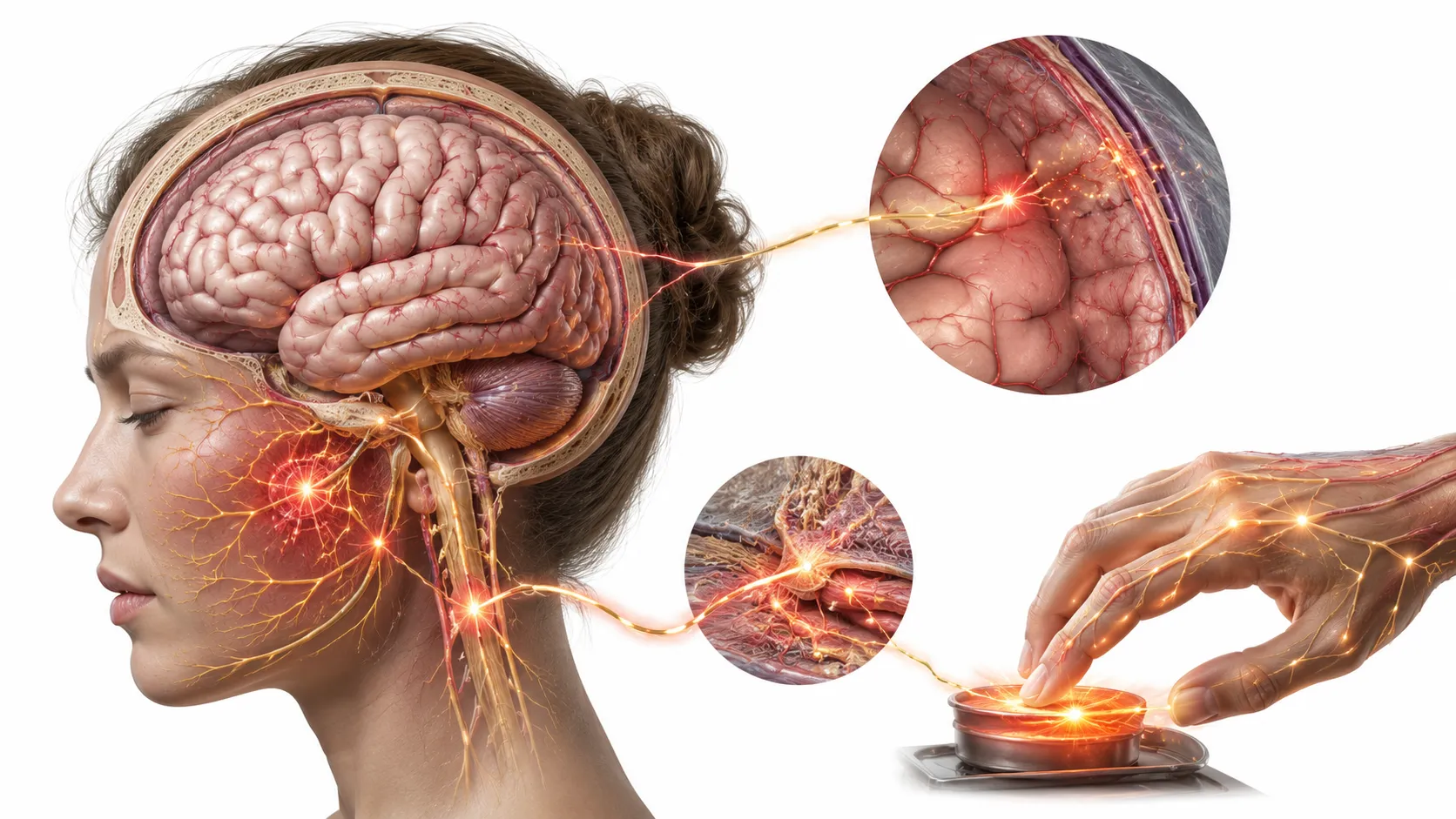
Can the Brain Feel Pain?
The brain controls all pain in your body, yet it cannot feel pain itself. Discover why, and what this strange fact re...
Body & Brain
Does Your Brain Eat Itself?
Your brain really does consume parts of itself. Learn about autophagy, synaptic pruning, and why self-consumption is...