Visual answer
Three Systems That Drive Sugar Cravings
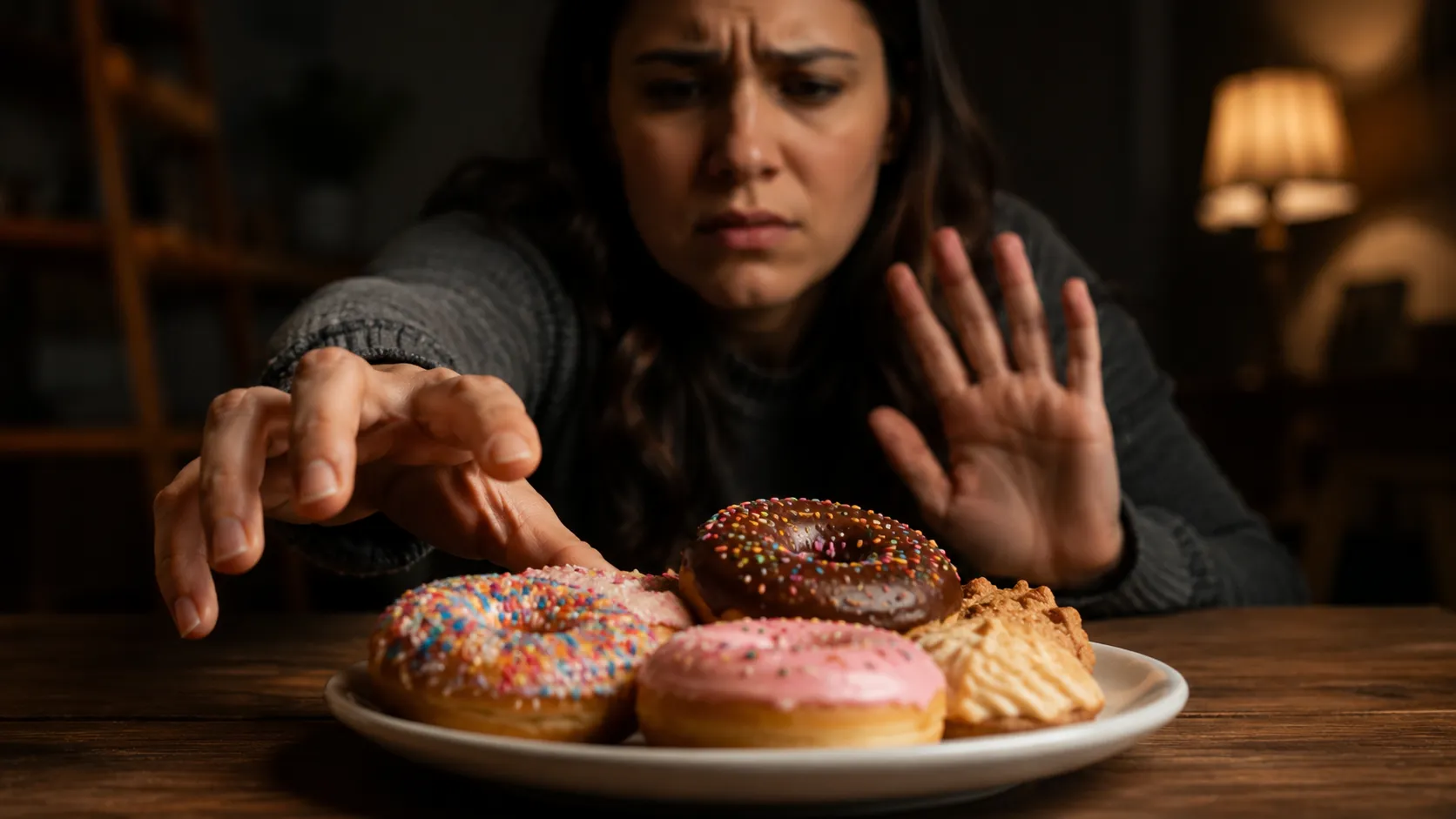
Metabolic need, reward learning, and stress hormones all push toward sugar simultaneously.
Blood sugar drop triggers metabolic craving
Hypothalamic glucose-sensing neurons detect falling blood sugar and signal hunger. The signal has urgency specifically for fast-absorbing foods. Sweet taste reliably predicts glucose, so the craving focuses on sweetness.
Sweet taste activates the dopamine reward system
Taste receptors detect sweet compounds and send signals to the nucleus accumbens. Dopamine release creates a reward signal. The brain associates sweet taste with reward and generates craving before blood sugar changes.
Cortisol intensifies both pathways
Stress hormones increase hypothalamic appetite signaling and sensitize the reward system to food cues. Chronic stress chronically elevates sugar craving through simultaneous action on both pathways.
Insulin response creates a craving cycle
High sugar intake triggers insulin release, rapidly lowering blood sugar. The rapid drop triggers another craving signal. High-sugar diets create reactive hypoglycemia that perpetuates the craving cycle.
Evolutionary origin
Your Sugar Preference Was Built for a World With Almost No Sugar
For most of human evolutionary history, concentrated sweet foods were rare and seasonal. Ripe fruit was available for weeks, honey required finding and raiding a beehive at significant personal risk. The intense reward signal that makes sugar feel good evolved to motivate humans to seek these calorie-dense foods whenever they appeared, because they might not be available again for months.
The modern food environment has completely decoupled this system from its evolutionary context. The same neural reward that motivated our ancestors to eat available fruit now responds to industrially engineered foods that deliver sugar in higher concentrations than any natural food source, at every meal, year-round. The craving mechanism is identical but the trigger is present constantly rather than rarely.
This is partly why calorie-dense processed foods are engineered to hit the exact sweet spot of sugar, fat, and salt that maximizes dopamine response. Food scientists have studied the reward pathways extensively. Products designed at these specific combinations generate more powerful hedonic responses than any single component alone, an effect researchers call hyper-palatability.
Myth vs reality
Myth vs Reality
What people think
Sugar cravings mean your body needs sugar
Cravings are driven by dopamine-based reward learning and blood sugar dynamics, not by actual nutritional deficiency. The body can produce glucose from fat and protein. A craving for sugar is not a signal that you lack sugar; it is a conditioned reward signal that the brain has learned to generate.
What actually happens
Cravings are learned responses, which means they can be unlearned
Because sugar cravings are partly conditioned dopamine responses, they respond to repeated exposure reduction. Studies on sugar reduction consistently show that craving intensity falls significantly after two to four weeks of reduced intake, as the brain recalibrates its reward baseline.
Quick answers
Common questions
Why do sugar cravings hit hard at night? +
Cortisol is at its lowest at night, reducing its appetite-suppressing effect. Willpower and impulse control, both managed by the prefrontal cortex, are depleted after a full day of decisions. Blood sugar may have dropped after dinner. All three converge to make late-night sugar cravings stronger than daytime ones.
Does eating sugar cause more sugar cravings? +
In the short term, yes, due to the insulin response causing reactive blood sugar dips. In the medium term, repeated sugar intake reinforces the dopamine reward pathway, making the conditioned craving stronger. The relationship between sugar consumption and craving is dose-dependent and partly self-reinforcing.
Why do some people seem unaffected by sugar cravings? +
Genetic variation in taste receptor genes, dopamine receptor density, and gut microbiome composition all affect sugar reward magnitude. Some people genuinely experience weaker dopamine responses to sweet foods, feel satisfied faster, or have more stable blood sugar regulation.
Do artificial sweeteners help with cravings? +
Evidence is mixed. They satisfy the sweet taste receptor response without calories, which can reduce intake short term. But some research suggests they may maintain the conditioned craving signal without delivering the caloric reward the brain expects, potentially increasing appetite for other foods.
Why do I crave sugar specifically when stressed? +
Cortisol increases appetite for high-energy foods through hypothalamic signaling. It also activates the reward system's sensitivity to food cues, making dopamine-based food rewards more salient. Stress effectively lowers the threshold for craving while increasing the reward magnitude of eating.